Building a Safety Culture That Protects People and Projects
- A genuine safety culture is built on leadership behavior, worker empowerment, and daily habits, not on policy binders or annual compliance paperwork.
- Construction remains the U.S. industry with the highest number of worker deaths: 1,032 construction and extraction workers died on the job in 2024, according to the U.S. Bureau of Labor Statistics.
- The “Fatal Four” hazards defined by OSHA (falls, struck-by, electrocution, and caught-in/between) cause roughly 6 in 10 construction deaths.
- The business case is direct: OSHA reports that every $1 invested in an effective safety program returns about $4 to $6, and the National Safety Council estimates the average medically consulted work injury cost $48,000 in 2024.
- Safety performance is a leading indicator of operational excellence. Contractors disciplined enough to prevent injuries tend to be equally disciplined with schedule, budget, and quality.
- Owners can verify a real safety culture by checking third-party benchmarks such as the Associated Builders and Contractors STEP program (which recognizes six levels, from Participant to Diamond), Experience Modification Rate (EMR), and leading-indicator data.
What separates a real safety culture from safety paperwork?
A real safety culture shows up in behavior, not in binders. It is the difference between a company that has a safety manual and a company where a first-year laborer will stop a multi-million-dollar pour because something looks wrong, and be thanked for it.
Compliance answers a regulator’s question: “Did you follow the rule?” Culture answers a harder one: “What happens when no one is watching?” Compliance-driven safety treats hazards as items to document. Culture-driven safety treats them as problems to solve before anyone gets hurt. The two can look identical on paper. They produce very different outcomes on a jobsite.
For owners selecting a construction partner, this distinction is not abstract. It predicts whether a project finishes on schedule and on budget, or whether it stalls after an incident that was entirely preventable.
What is a safety culture in construction?
A safety culture is the shared set of values, behaviors, and habits that determine how an organization manages risk when no one is enforcing the rules. In construction, it means safety is built into daily decisions (planning, training, reporting, and accountability) rather than treated as a compliance task handled separately from the work.
How dangerous is construction work in 2026?
Construction is the deadliest industry in the United States by total fatality count. In 2024, 1,032 construction and extraction workers lost their lives on the job, according to the U.S. Bureau of Labor Statistics Census of Fatal Occupational Injuries, released in February 2026. Across all industries, a worker died from a work-related injury every 104 minutes that year.
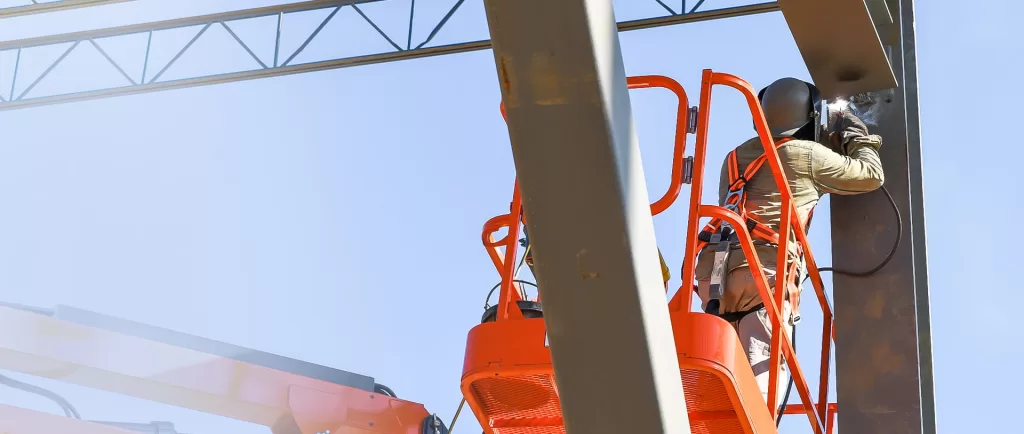
Falls remain the single largest threat. Occupational Safety and Health Administration, OSHA, reports that 389 of the 1,034 construction fatalities recorded in 2024 were fatal falls to a lower level, and the agency emphasizes that these deaths are preventable.
Most construction deaths trace back to four recurring hazards. OSHA groups them as the “Fatal Four”: falls, struck-by incidents, electrocution, and caught-in or caught-between incidents. Together, these four categories account for roughly 60% of all construction worker deaths. Their persistence is the central problem of construction safety: the hazards are well understood, the prevention methods are well documented, and workers keep dying from them anyway.
The reason is rarely a missing rule. It is a gap between the rule and the behavior, which is precisely what culture either closes or leaves open.
What is the most important element of a construction safety culture?
Leadership commitment is the foundation, because every other element depends on it. Worker empowerment, training quality, hazard identification, accountability, and continuous improvement all require leaders who allocate resources and model safe behavior consistently. Without authentic leadership commitment, the other elements become paperwork.
What does a workplace injury actually cost?
A single serious injury costs far more than a workers’ compensation claim. The National Safety Council estimates that the average medically consulted work injury cost $48,000 in 2024, and the average work-related death cost roughly $1.54 million. Nationally, work injuries cost an estimated $181.4 billion that year.
Those are only the visible costs. Indirect costs (schedule delays, re-planning, lost productivity, investigation time, replacement-worker training, and damaged client relationships) can run several times higher than the direct medical and compensation figures. On a construction project with contractual completion dates and liquidated-damages clauses, a stoppage after an incident can cascade into penalties that dwarf the injury itself.
This is why safety is a financial argument, not only a moral one. OSHA reports that effective safety and health programs can reduce injury and illness rates by 20% or more, and that employers can expect a return of roughly $4 to $6 for every $1 invested in safety. The same OSHA business-case analysis cites Liberty Mutual’s finding that U.S. employers pay more than $1 billion per week in direct workers’ compensation costs for disabling injuries.
For a risk manager or CFO, the takeaway is simple. Safety spending is not overhead. It is one of the highest-return investments a capital project can make.
How does safety affect construction insurance costs?
Strong safety performance lowers a contractor’s Experience Modification Rate (EMR), which directly reduces workers’ compensation insurance premiums. A lower incident rate also reduces the frequency of investigations and project shutdowns. Over the life of a contractor’s operations, the insurance savings from a strong safety culture can total a substantial amount.
What is a culture-driven safety program, and how is it different from a compliance-driven one?
A culture-driven safety program makes safety the responsibility of everyone, every day, while a compliance-driven program makes it the responsibility of a safety officer at audit time. The first prevents incidents. The second documents them.
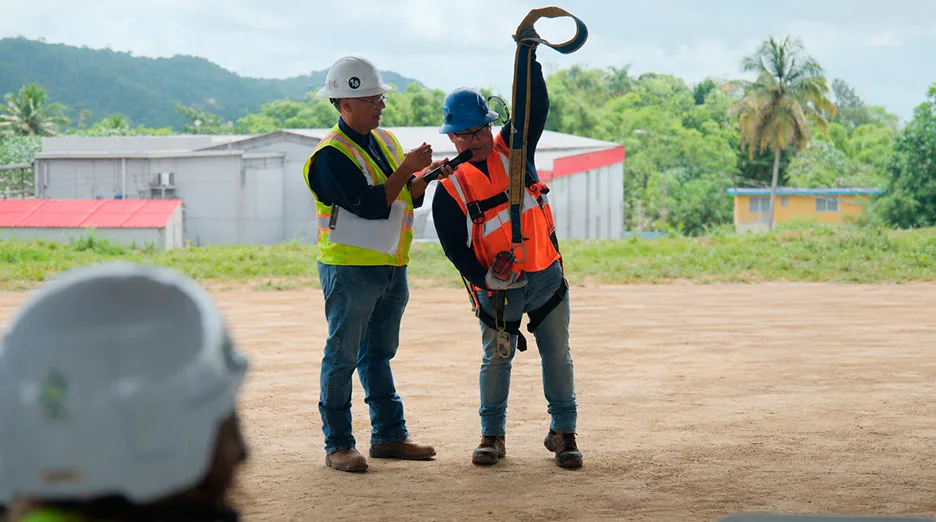
The distinction is visible in small behaviors. In a compliance culture, a toolbox talk is a signature sheet. In a genuine safety culture, it is a two-way conversation where a crew flags the specific hazards of that day’s work. In a compliance culture, near-misses go unreported because reporting feels like admitting fault. In a genuine safety culture, near-misses are treated as free lessons and actively solicited, because a near-miss is an injury that gave you a warning instead of a victim.
Genuine safety cultures share six building blocks. The rest of this article walks through each one, because they are also the criteria owners should use to evaluate any contractor’s safety claims.
What are the building blocks of a genuine safety culture?
Does leadership actually commit, or just sign the policy?
Leadership commitment is the foundation, and it is measured in resource allocation and personal behavior, not in mission statements. Workers read what leaders do far more accurately than what leaders say. When an executive walks a jobsite wearing the required protection, stops to ask a foreman about a hazard, and visibly supports a schedule change made for safety reasons, the message reaches every crew faster than any memo.
The opposite message travels just as fast. If leadership praises the team that finished early by cutting a corner, the entire organization learns what is actually valued. Authentic commitment means leadership accepts that safety sometimes costs time and money in the short term, and treats that cost as non-negotiable.
Can a worker stop the work without fear?
Worker empowerment means every person on site has genuine stop-work authority and can report hazards without blame. This single element separates mature safety cultures from immature ones. Stop-work authority is only real if the worker who uses it is protected and supported afterward, even when the stoppage proves to be a false alarm. The moment a worker is punished or mocked for raising a concern, the authority becomes fiction and hazards go quiet.
Blame-free reporting works the same way. The goal is to surface problems early, which requires removing the fear that surfacing a problem will end badly for the person who raised it.
What is stop-work authority?
Stop-work authority is the right of any worker, regardless of seniority, to halt a task they believe is unsafe without fear of punishment. It is a hallmark of a mature safety culture because it pushes hazard prevention to the people closest to the work, and it only functions when leadership consistently supports workers who use it, including when the stoppage turns out to be unnecessary.
Is training task-specific and ongoing, or a one-time orientation?
Effective safety training is continuous and specific to the task at hand, not a single orientation completed on a worker’s first day. Hazards change as a project moves through phases: excavation risks give way to structural risks, then to electrical and finishing risks. Training that ends at orientation cannot keep pace with work that constantly changes.
Strong programs combine new-hire orientation with daily toolbox talks tied to that day’s scope, role-specific instruction for high-risk activities, and supervisor coaching that reinforces standards in the field.
How are hazards found before they cause harm?
Proactive hazard identification finds and fixes risks before work begins, using structured tools rather than relying on luck or hindsight. The three most reliable tools are Job Safety Analyses (JSAs) that break a task into steps and map the hazard in each, daily toolbox talks that align the crew on the day’s specific risks, and near-miss reporting that captures warnings before they become injuries.
Near-miss reporting deserves particular emphasis. A near-miss is a gift: a hazard that revealed itself without hurting anyone. Organizations that actively collect and act on near-misses are reading early warnings their competitors are ignoring.
What is a Job Safety Analysis (JSA)?
A Job Safety Analysis (JSA) is a structured process that breaks a task into its individual steps, identifies the hazard associated with each step, and defines the control that will prevent harm. It is completed before work starts, which makes it a proactive (leading) safety tool rather than a reactive response to an incident that already happened.
How does the organization learn from what goes wrong?
Continuous improvement means the organization treats every incident and near-miss as data, investigates root causes rather than assigning blame, and feeds the lessons back into training and procedures. A safety culture that does not learn is a safety culture that repeats. The strongest programs close the loop: an event is investigated, a cause is identified, a procedure is changed, and the change is communicated to everyone who needs it.
Why does safety performance predict overall project success?
Safety performance is one of the most reliable leading indicators of whether a contractor will deliver a project well, because the same disciplines that prevent injuries also prevent budget overruns and schedule failures.
Consider what a strong safety record actually requires: detailed planning before work begins, systematic identification of risks, clear communication across the crew, accountability at every level, and a habit of learning from mistakes. Those are not safety skills. They are operational skills. An organization that applies them rigorously to safety is almost certainly applying them to estimating, scheduling, and quality control as well, because the discipline is cultural, not departmental.
The reverse is equally telling. A contractor with a poor safety record is revealing a tolerance for cutting corners, weak field communication, and reactive rather than systematic management. Those weaknesses do not stay contained in the safety column. They show up as change orders, rework, and missed milestones.
Does a contractor’s safety record predict project performance?
Yes. Safety performance is widely regarded as a leading indicator of operational excellence because preventing injuries requires the same disciplines that deliver projects on time and on budget: rigorous planning, systematic risk identification, strong communication, accountability, and continuous learning. Contractors with strong safety records tend to demonstrate the same rigor in schedule, cost, and quality management.
How can owners verify a contractor’s safety culture is genuine?
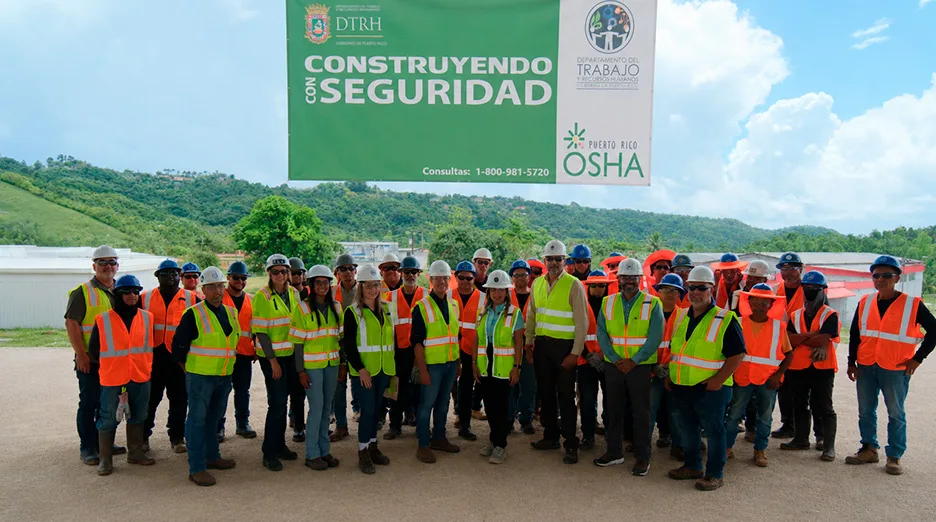
Owners can verify a safety culture by looking past the safety manual to third-party benchmarks and leading-indicator data that are difficult to fake. Four checks separate genuine programs from paperwork.
First, ask for the contractor’s recognition level in the Associated Builders and Contractors Safety Training Evaluation Process (STEP). STEP is a benchmarking program that grades a contractor’s safety management system across key components and assigns one of six levels: Participant, Bronze, Silver, Gold, Platinum, and Diamond. The top levels are not awarded for having policies. They require documented evidence of mature, consistently applied practices. ABC reports that STEP participants are 688% safer than the industry average and see an 85% reduction in recordable incident rates.
Second, ask for the Experience Modification Rate (EMR). EMR is an insurance-derived number that compares a contractor’s claims history to the industry average. A figure below 1.0 indicates a better-than-average loss record, and it is hard to manipulate because it is based on actual claims.
Third, ask to see leading indicators, not just injury counts. Request data on near-miss reporting volume, JSA completion, toolbox-talk frequency, and how corrective actions are tracked to closure. A contractor who can produce this data manages safety proactively. A contractor who can only produce an injury count manages it reactively.
Fourth, ask how stop-work authority actually functions. The answer reveals whether worker empowerment is real or rhetorical.
How CIC Construction Group builds a safety culture that protects people and projects
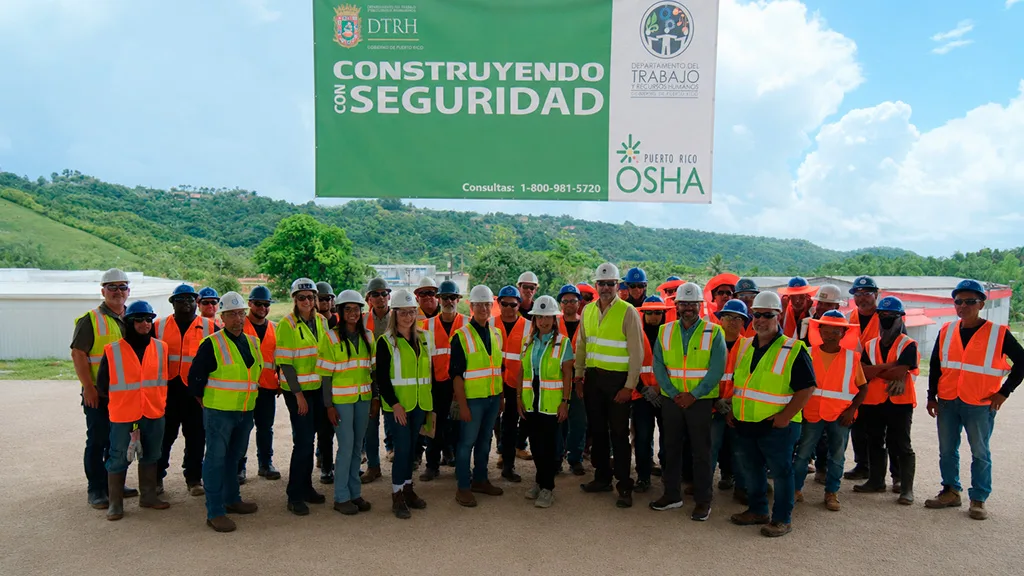
CIC Construction Group treats safety as the foundation of operational excellence, and the company’s record reflects that standard. CIC holds STEP Platinum recognition from the Associated Builders and Contractors and has maintained a zero recordable accidents record since 2012, across complex projects in life sciences, healthcare, industrial, commercial, and warehouse construction in Puerto Rico, North Carolina, and Florida.
That record is not the product of luck or easy projects. It reflects the six building blocks described above, applied consistently: leadership that funds and models safe behavior, workers empowered to stop work and report hazards, training tied to the specific risks of each phase, proactive hazard identification through structured planning, accountability shared across every level, and a continuous-improvement habit that turns every near-miss into a lesson.
The philosophy behind it is simple enough to fit on a single line, and it governs every decision on every site: everyone goes home safe. For owners evaluating a construction partner, that standard is also a promise about how the rest of the work will be managed. A company disciplined enough to protect every worker, every day, brings the same discipline to protecting your schedule, your budget, and your project.
Our safety standards are as strong as any foundation we’ve ever built, contact us.