Construction 2030: Five Forces Reshaping How America Builds
The construction industry stands at an inflection point. By 2030, the global construction market will reach $16.11 trillion… a $4.5 trillion increase from 2024 levels. Yet this growth unfolds against a backdrop of unprecedented transformation. Five converging forces are fundamentally reshaping project delivery, competitive dynamics, and the very definition of construction excellence.
For project owners evaluating contractors and planning capital investments, understanding these forces it’s the foundation for making decisions that determine project success. The contractors who thrive through 2030 won’t simply adapt to change; they’ll leverage these forces as competitive advantages.
Force 1: The AI Revolution Reshaping Project Intelligence
Artificial intelligence is experiencing explosive adoption in construction—but with a critical gap between aspiration and implementation that separates industry leaders from laggards. The AI in construction market will surge from $2.93 billion in 2023 to $16.96 billion by 2030—a 26.9% compound annual growth rate that signals transformation at scale.
The opportunity is staggering. According to the Construction Management Association of America, AI has the potential to increase industry profits by 71% by 2035. Yet a 2025 Royal Institution of Chartered Surveyors survey reveals that 45% of construction organizations report no AI implementation, with 34% still in early pilot phases.
This adoption gap creates strategic advantage for early movers. AI-powered applications are revolutionizing core functions:
- Project Management & Risk Mitigation: Predictive analytics identify potential delays and cost overruns before they materialize, enabling proactive intervention rather than reactive crisis management.
- Safety Enhancement: Computer vision systems monitor jobsites in real-time, flagging safety violations and dangerous conditions with speed and accuracy that manual oversight cannot match.
- Resource Optimization: Machine learning optimizes equipment deployment, material procurement, and workforce scheduling, reducing waste and improving productivity.
- Design Innovation: Generative AI explores thousands of design permutations, identifying solutions that balance cost, performance, and sustainability in ways traditional approaches miss.
For project owners, the implication is clear: contractors with mature AI capabilities deliver measurably better outcomes. When evaluating bids, ask not whether a firm uses AI, but how deeply it’s integrated into their operations and what performance improvements they can demonstrate.
Force 2: Automation & Robotics Acceleration
The construction industry’s reputation as technology-averse is rapidly becoming obsolete. Automation technologies are moving from experimental pilots to mainstream deployment, driven by compelling economics and operational necessity. The global 3D printing construction market exemplifies this transformation: valued at $3.5 billion in 2022, it’s projected to explode to $523 billion by 2030.
Beyond 3D printing, digital twin technology represents another automation frontier experiencing rapid maturation. The market will grow from $64.87 billion in 2025 to $155.01 billion by 2030. Digital twins create virtual replicas of physical assets, enabling simulation, optimization, and predictive maintenance that dramatically reduce lifecycle costs and improve building performance.
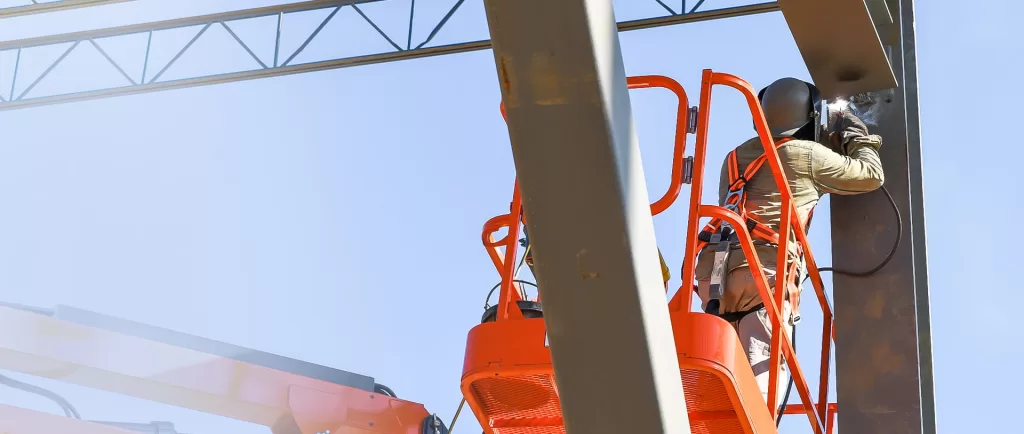
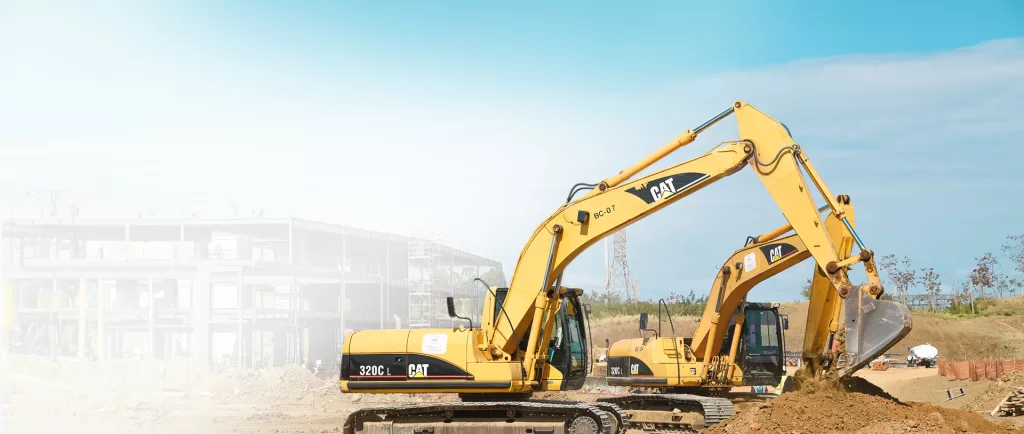
Autonomous equipment and construction robotics are similarly transitioning from novelty to necessity. Robotic systems now handle bricklaying, concrete pouring, steel welding, and site surveying, performing repetitive and hazardous tasks with precision that improves quality while enhancing worker safety.
The strategic question for project owners isn’t whether automation will transform construction it’s which contractors are investing in these capabilities now. Firms that master automation deliver faster schedules, tighter budgets, and superior quality. Those that don’t will struggle to compete on anything beyond price.
Force 3: Sustainability Mandates Transform from Aspiration to Obligation
Sustainability requirements have evolved from voluntary best practices to legal imperatives. The construction industry, responsible for 39% of global carbon emissions, faces mounting regulatory pressure as governments worldwide mandate decarbonization
The European Union leads this transformation. The Energy Performance of Buildings Directive requires all new construction to achieve zero on-site emissions by 2030, with publicly-owned buildings meeting this standard by 2028. Member states must renovate the worst-performing 16% of non-residential building stock by 2030, with lifecycle emissions calculations mandatory for all structures built starting in 2030.
North American regulations are following suit, though through different mechanisms. California targets 40% greenhouse gas reduction below 1990 levels by 2030, with carbon neutrality by 2045. Recent legislation requires construction equipment fleets to report actual energy usage rather than estimates, establishing accountability for emissions reduction.
The industry is responding with innovation. Sustainable materials, recycled steel, engineered bamboo, low-carbon concrete alternatives, are transitioning from niche applications to mainstream specification. Building designs prioritize energy efficiency through advanced envelope systems, renewable energy integration, and intelligent building systems that optimize resource consumption.
((Also Read: Structural Steel: Building Stronger, Smarter, Safer))
Force 4: The Multi-Million Worker Deficit Reshaping Competition
The construction industry’s workforce crisis represents the most immediate and severe constraint on growth.
The construction industry will need to attract an estimated 349,000 net new workers to keep up with demand this year, according to data from Associated Builders and Contractors. That number is set to rise to 456,000 in 2027, as spending growth is poised to resume.
Even more concerning: 41% of the current workforce will retire by 2031, while only 10% of current workers are under 25.
The numbers are staggering. If current trends persist, the industry faces a potential shortage of over 2 million skilled craft professionals by 2028. The surge in large-scale projects, like data centers, energy storage facilities, semiconductor manufacturing, draws a disproportionate share of available electricians, welders, and HVAC technicians, further straining the labor pool.
These workforce dynamics create decisive competitive advantages for contractors who buck industry trends. Firms maintaining stable, long-tenured workforces deliver superior project outcomes through institutional knowledge, refined processes, and relationship continuity that transient labor cannot replicate. When project timelines compress or complexity increases, workforce stability becomes the difference between successful delivery and failure.
Project owners evaluating contractors should scrutinize workforce metrics with the same rigor applied to safety records and financial statements. Average employee tenure, turnover rates by trade, and training program investments reveal far more about execution capability than any bid price.
Force 5: Market Consolidation Accelerates Through Strategic M&A
The construction industry’s historically fragmented structure is transforming through accelerating merger and acquisition activity. Construction M&A surged 33.8% year-over-year through 2025, from 272 deals to 364, with 73.4% driven by private equity firms recognizing the sector’s resilience and growth prospects.
The capital available for deployment is extraordinary. Private equity and strategic buyers hold approximately $2 trillion in “dry powder”, uninvested capital seeking attractive returns in sectors with stable fundamentals. Construction’s essential role in economic activity, combined with secular growth drivers like infrastructure modernization and data center expansion, makes it an increasingly attractive target.
This consolidation wave is driven by multiple strategic imperatives. McKinsey projects industry growth will accelerate from 5% annually to 6-7% by 2030, creating substantial value for firms positioned to capture market share.
Buyers seek specialized capabilities—particularly in high-growth sectors like data centers, renewable energy, and advanced manufacturing—that acquisition delivers faster than organic development.
Technology acquisition represents another critical driver. Firms lacking internal AI, automation, and digital capabilities increasingly buy rather than build these competencies. The pace of technological change makes acquisition more economically rational than attempting to develop expertise internally while simultaneously managing existing operations.
Labor access drives consolidation as well. In markets with acute skill shortages, acquiring firms with established workforces provides immediate access to capabilities that hiring cannot deliver. Geographic expansion through acquisition allows firms to enter new markets with local relationships, permitting knowledge, and operational infrastructure already in place.
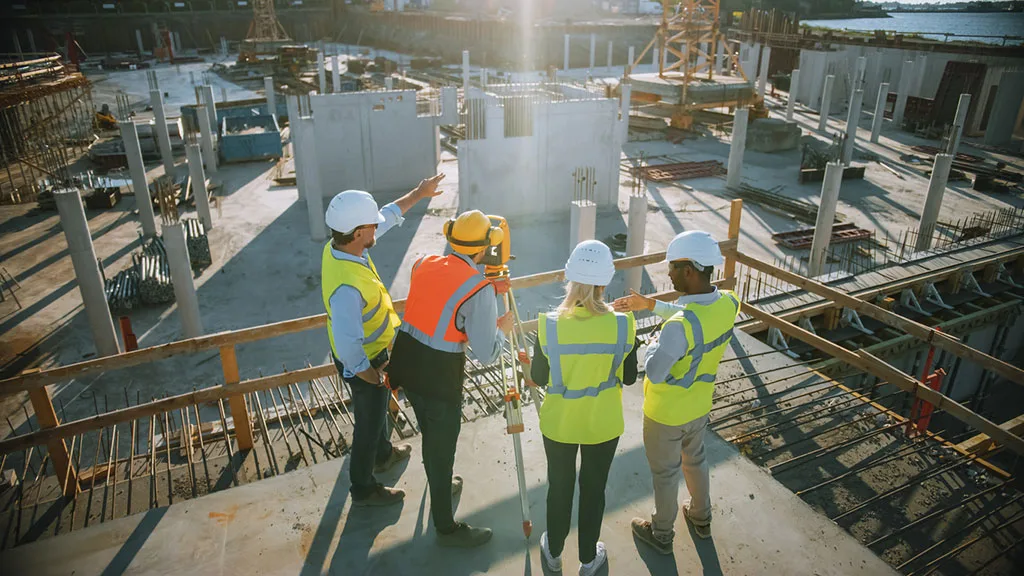
The Convergence: Where Five Forces Intersect
These five forces don’t operate independently. They amplify and accelerate one another, creating transformation that exceeds the sum of individual trends.
Workforce shortages drive automation adoption, which requires AI capabilities to maximize effectiveness. Sustainability mandates demand technology solutions, digital twins for energy optimization, AI for material selection, robotics for waste reduction.
M&A activity concentrates capital and technology investment in larger firms while creating acquisition opportunities for innovative mid-market companies.
Consider data center construction, where all five forces converge. AI-driven demand creates project volumes exceeding available skilled labor. Contractors deploy automation and prefabrication to accelerate delivery. Sustainability requirements mandate renewable energy integration and carbon accounting. M&A consolidates capabilities as firms acquire specialized electrical, mechanical, and technology integration expertise.
The result is a new competitive landscape where traditional differentiators—low bids, local presence, relationship history—matter less than technological capability, workforce stability, sustainability initiatives, and financial strength. Success by 2030 requires excellence across all five dimensions simultaneously.
Strategic Implications for Project Owners
These industry forces reshape how sophisticated project owners should approach contractor selection, contract structure, and project planning.
Redefining Contractor Evaluation Criteria
Bid price becomes one factor among many, rather than the primary decision driver. Rigorous evaluation should include:
- Technology Maturity Assessment
- Workforce Stability Metrics
- Sustainability Initiatives
- Financial Strength & Ownership Stability
The Transformation
The construction industry’s transformation through 2030 is not speculative—it’s underway. AI adoption accelerates despite implementation gaps. Automation technologies mature from experimental to operational. Sustainability regulations transition from voluntary to mandatory. Workforce constraints intensify. Market consolidation reshapes competitive dynamics.
Project owners who recognize these forces as opportunities rather than obstacles will secure superior project outcomes. Those who cling to traditional evaluation criteria—lowest bid, familiar faces, local presence—risk partnering with contractors ill-equipped for the demands of modern project delivery.
Success in the construction market of 2030 demands contractors who master technology, maintain stable workforces, deliver sustainable outcomes, demonstrate financial strength, and continuously innovate. The five forces reshaping American construction aren’t disrupting how we build—they’re defining a new standard of excellence.
At CIC Construction Group, these five forces aren’t future challenges—they’re current capabilities. Our teams average over 17 years of tenure, providing the institutional knowledge and relationship continuity that complex projects demand. Our life sciences, advanced technology, industrial, and commercial construction expertise positions us to deliver the sophisticated project execution that critical infrastructure requires.
If you’re planning a project where execution certainty matters, we invite you to connect with our team to discuss how our approach to workforce stability, technological capability, and sustainable delivery translates to measurable project outcomes.